
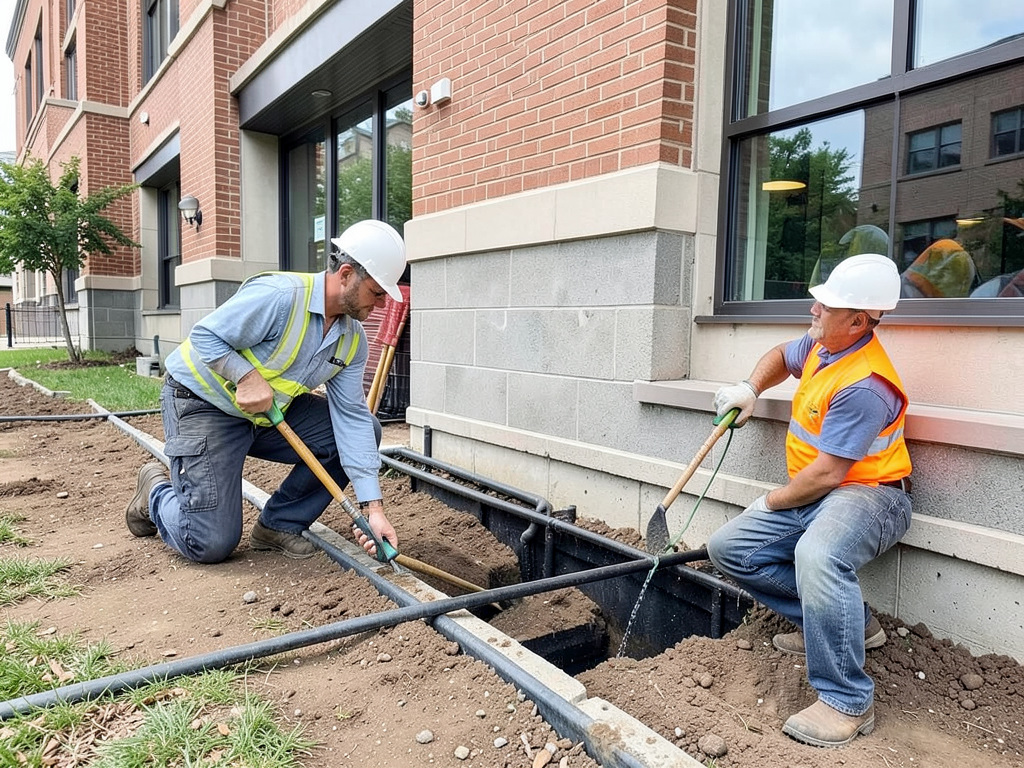
Protecting Your Indianapolis Business from Heavy Rain Drainage Issues
Heavy rain in Indianapolis can overwhelm commercial properties quickly. When drainage systems fail, water backs up, seeps into foundations, and causes thousands in damage. Property managers need to understand how Indiana’s clay-heavy soil, freeze-thaw cycles, and intense spring storms create unique drainage challenges. The right commercial drainage system prevents interior flooding, protects structural integrity, and keeps your business operational during severe weather. Indiana Department of Environmental Management.
Understanding Indianapolis Commercial Drainage Challenges
Indianapolis experiences approximately 42 inches of annual rainfall, with most falling during spring and summer months. Combined with the region’s heavy clay soil that expands when wet and contracts when dry, commercial properties face constant pressure on their drainage infrastructure. The freeze-thaw cycles common in Central Indiana create additional stress on pipes, catch basins, and foundation walls.. Read more about Rapid Response for Commercial Kitchen Flooding and Grease Trap Backups in Broad Ripple.
Many Indianapolis commercial buildings sit on land where the water table can rise significantly during wet seasons. This hydrostatic pressure pushes water through foundation cracks, around basement windows, and through porous concrete. Without proper exterior drainage management, this water eventually makes its way inside, damaging inventory, equipment, and building materials. Who to Call for Emergency Water Damage Restoration in Carmel.
Common Drainage Failure Points in Commercial Properties
Commercial drainage systems fail in predictable patterns. Surface water pooling near foundation walls indicates grading problems. Standing water in parking lots suggests inadequate catch basins or clogged storm drains. Water stains on interior walls often trace back to exterior drainage issues that have gone unaddressed for years. Complete Water Damage Repair for Historic Homes in Meridian-Kessler.
The most vulnerable areas include loading docks where water collects during deliveries, basement stairwells that become water funnels, and low-lying sections of parking lots where multiple surfaces converge. Each failure point represents a potential entry point for water that can escalate from a minor inconvenience to a major restoration project requiring professional intervention. Professional Sewage Cleanup and Sanitization Services in Greenwood.
Commercial Drainage Solutions for Indianapolis Properties
Effective commercial drainage requires a comprehensive approach. French drains installed around building perimeters collect subsurface water before it reaches foundation walls. Catch basins strategically placed in low areas capture surface runoff and channel it away from structures. Trench drains handle high-volume water flow in areas like loading docks and parking garage entrances. Emergency Water Removal Services in Noblesville That Respond 24-7.
Sump pump systems provide backup protection for basements and below-grade areas. These systems activate automatically when water levels rise, pumping water out before it can cause damage. For properties near White River or in flood-prone areas, redundant sump pump systems with battery backup ensure continuous operation during power outages.. Read more about Why Clogged Fall Leaves Cause Foundation Seepage for Homeowners in Traders Point.
Site Grading and Surface Water Management
Proper site grading directs water away from buildings naturally. Commercial properties need a minimum 2% slope away from foundation walls to prevent water pooling. This requires professional surveying and often involves importing fill dirt to create the necessary elevation changes. Impermeable surfaces like parking lots need integrated drainage systems that collect and channel water to appropriate discharge points.
Permeable pavers offer an alternative for areas where traditional drainage proves difficult. These specialized surfaces allow water to pass through while maintaining structural integrity for vehicle traffic. They reduce runoff volume and help properties comply with Indianapolis Department of Public Works stormwater regulations.
Retention and Detention Pond Systems
Large commercial properties often require retention or detention ponds to manage stormwater runoff. Retention ponds hold water permanently and provide both drainage and aesthetic benefits. Detention ponds temporarily store water during storms and release it slowly to prevent overwhelming municipal systems. Safe and Permanent Mold Remediation for Homes in Broad Ripple.
Both systems require regular maintenance to function properly. Accumulated sediment reduces capacity, vegetation overgrowth blocks water flow, and structural damage to embankments can lead to catastrophic failure. Annual inspections by qualified professionals identify issues before they cause property damage or regulatory violations.
Indianapolis Stormwater Regulations and Compliance
The City of Indianapolis requires commercial properties to manage stormwater on-site according to Department of Public Works standards. These regulations specify minimum drainage requirements, discharge rates, and water quality standards. Properties must demonstrate compliance through engineered drainage plans submitted during permitting processes.
Non-compliance can result in fines, forced remediation, and liability for downstream flooding. Many property managers discover drainage issues only after receiving violation notices or experiencing flooding events. Proactive compliance through professional drainage assessments prevents these costly scenarios.
Emergency Drainage Repair Services
When drainage systems fail during storms, immediate response prevents extensive damage. Emergency services include clearing blocked catch basins, repairing broken pipes, and installing temporary pumps to remove standing water. Quick response limits water exposure time, reducing the likelihood of mold growth and structural damage.
Commercial properties benefit from having established relationships with drainage contractors who can mobilize quickly during emergencies. Response time becomes critical when water threatens inventory, equipment, or business operations. Properties in areas like Downtown Indianapolis or near White River State Park face unique challenges due to older infrastructure and combined sewer systems.
Preventative Maintenance for Commercial Drainage Systems
Regular maintenance prevents most drainage failures. Annual cleaning of catch basins removes debris that would otherwise clog drainage systems. Inspection of underground pipes identifies cracks or root intrusion before they cause failures. Testing sump pumps ensures they activate when needed.
Properties should establish maintenance schedules based on their specific drainage components and local conditions. Areas with heavy tree cover need more frequent catch basin cleaning. Properties near construction sites require additional inspections due to increased sediment runoff. The cost of preventative maintenance typically runs 10-15% of what emergency repairs would cost.
Commercial Drainage Case Study: Downtown Indianapolis Office Building
A six-story office building in Downtown Indianapolis experienced chronic basement flooding during heavy rains. The property manager contacted drainage specialists who discovered the issue stemmed from inadequate exterior drainage combined with aging interior systems. The solution involved installing new French drains around the foundation, replacing damaged catch basins in the parking area, and upgrading the sump pump system with redundant units.
The project cost $45,000 but prevented an estimated $200,000 in potential damage from a single major storm event. The building has remained dry through three subsequent heavy rain seasons, and the property manager reports improved tenant satisfaction and reduced maintenance calls.
Choosing the Right Drainage Contractor
Commercial drainage requires specialized expertise beyond residential landscaping. Contractors should hold appropriate Indiana contractor licenses and carry comprehensive insurance coverage. Experience with local soil conditions, building codes, and municipal requirements proves essential for successful projects.
Professional contractors provide detailed proposals including site assessments, system designs, and maintenance recommendations. They should explain how their solutions address specific property vulnerabilities and comply with local regulations. References from similar commercial projects demonstrate relevant experience.
Cost Factors for Commercial Drainage Projects
Commercial drainage project costs vary based on property size, existing conditions, and required solutions. Simple catch basin replacements might cost $2,000-5,000, while comprehensive drainage system installations for large properties can exceed $100,000. Factors affecting cost include excavation requirements, material specifications, and permitting needs.
Properties should budget for both initial installation and ongoing maintenance. While upfront costs seem substantial, they pale compared to potential damage from system failures. Many property insurance policies offer premium discounts for documented drainage improvements, providing additional financial incentives for proper system installation.
Technology and Modern Drainage Solutions
Modern drainage systems incorporate technology for improved monitoring and control. Smart sump pumps with water level sensors provide real-time alerts when water approaches critical levels. Remote monitoring systems allow property managers to track system performance from anywhere, enabling proactive responses to developing issues.
Geographic Information System (GIS) mapping helps identify drainage patterns and problem areas across large properties. This technology enables targeted improvements rather than costly system-wide replacements. Some advanced systems integrate with building management systems, automatically adjusting operations based on weather forecasts and current conditions.
Environmental Considerations and Sustainable Drainage
Sustainable drainage practices benefit both property owners and the environment. Green infrastructure like bioswales and rain gardens reduce runoff volume while improving water quality. These systems filter pollutants naturally and can qualify for environmental incentives or tax benefits in some jurisdictions.
Water harvesting systems capture runoff for landscape irrigation, reducing utility costs and stormwater discharge. Permeable pavement options decrease runoff while maintaining necessary surface durability for commercial use. These sustainable approaches often cost more initially but provide long-term operational savings and environmental benefits.
Insurance and Liability Considerations
Commercial drainage failures can create significant liability issues. Property owners may face lawsuits from neighboring properties if inadequate drainage causes flooding damage. Insurance companies often deny claims for damage resulting from neglected maintenance or code violations.
Documented drainage system maintenance and improvements strengthen insurance claims and may reduce premiums. Professional assessments provide evidence of due diligence in system maintenance. Some insurance providers require proof of proper drainage system function as a condition of coverage for certain property types.
Future-Proofing Your Commercial Drainage System
Climate change models predict increased precipitation intensity for Central Indiana, making robust drainage systems more critical than ever. Properties should design systems with capacity margins to handle future storm patterns rather than just current conditions. This forward-thinking approach prevents costly retrofits as weather patterns evolve.
Modular drainage systems allow for incremental upgrades as needs change. Starting with core components and adding capacity as required provides flexibility and better cash flow management. Planning for future expansion during initial design phases reduces overall project costs and disruption.
Frequently Asked Questions
How often should commercial drainage systems be inspected?
Commercial drainage systems need annual professional inspections minimum, with additional checks before and after heavy storm seasons. Properties in high-risk areas may require quarterly inspections to ensure optimal performance.
What are signs my commercial property needs drainage improvements?
Standing water near foundations, water stains on interior walls, musty odors in basements, and frequent sump pump activation indicate drainage problems requiring professional assessment.
How long do commercial drainage systems typically last?
Well-maintained commercial drainage systems last 15-25 years, though components like sump pumps may need replacement every 5-7 years. Regular maintenance extends system life and prevents premature failures.
Can drainage improvements reduce my property insurance costs?
Yes, many insurance providers offer premium discounts for documented drainage improvements that reduce flood risk. Some may require professional certification of system effectiveness.
Protecting Your Investment
Commercial drainage represents a critical investment in property protection and business continuity. The cost of proper system installation and maintenance pales compared to potential losses from flooding damage, business interruption, and liability claims. Indianapolis property owners who prioritize drainage infrastructure position themselves for long-term success regardless of weather conditions.
Don’t wait for the next heavy rain to discover your drainage system’s weaknesses. Professional assessment identifies vulnerabilities before they cause damage. With proper planning, installation, and maintenance, your commercial property can withstand Indiana’s most challenging weather events while protecting your assets and operations.
Call (317) 703-7676 today to schedule your commercial drainage assessment. Our team understands Indianapolis’s unique drainage challenges and provides solutions that protect your property investment. Don’t let the next storm catch you unprepared. For more information, visit IICRC Standards for Water Damage Restoration.
You may also find this helpful. What to Do When a Fire Sprinkler Accidentally Floods Your Downtown Indy Office.
{
“@context”: “https://schema.org”,
“@type”: “BlogPosting”,
“headline”: “Protecting Your Indianapolis Business from Heavy Rain Drainage Issues”,
“description”: “Prevent costly water damage with expert commercial drainage solutions in Indianapolis. Learn how to protect your property from heavy rain and flooding.”,
“wordCount”: 1836,
“datePublished”: “2026-04-12T10:52:00.000Z”,
“dateModified”: “2026-04-12T10:52:00.000Z”,
“inLanguage”: “en-US”,
“mainEntityOfPage”: {
“@type”: “WebPage”,
“@id”: “https://apexwaterdamagerestorationindianapolis.com”
},
“publisher”: {
“@type”: “LocalBusiness”,
“name”: “Apex Water Damage Restoration Indianapolis”,
“url”: “https://apexwaterdamagerestorationindianapolis.com”
},
“author”: {
“@type”: “Organization”,
“name”: “Apex Water Damage Restoration Indianapolis”,
“url”: “https://apexwaterdamagerestorationindianapolis.com”
},
“image”: {
“@type”: “ImageObject”,
“url”: “https://apexwaterdamagerestorationindianapolis.com/wp-content/uploads/2026/03/protecting-your-indianapolis-business-from-heavy-r-1.png”
}
}
{
“@context”: “https://schema.org”,
“@type”: “LocalBusiness”,
“name”: “Apex Water Damage Restoration Indianapolis”,
“url”: “https://apexwaterdamagerestorationindianapolis.com”,
“address”: {
“@type”: “PostalAddress”,
“addressLocality”: “Indianapolis”
},
“areaServed”: {
“@type”: “City”,
“name”: “Indianapolis”
}
}
{
“@context”: “https://schema.org”,
“@type”: “FAQPage”,
“mainEntity”: [
{
“@type”: “Question”,
“name”: “How often should commercial drainage systems be inspected?”,
“acceptedAnswer”: {
“@type”: “Answer”,
“text”: “Commercial drainage systems need annual professional inspections minimum, with additional checks before and after heavy storm seasons. Properties in high-risk areas may require quarterly inspections to ensure optimal performance.”
}
},
{
“@type”: “Question”,
“name”: “What are signs my commercial property needs drainage improvements?”,
“acceptedAnswer”: {
“@type”: “Answer”,
“text”: “Standing water near foundations, water stains on interior walls, musty odors in basements, and frequent sump pump activation indicate drainage problems requiring professional assessment.”
}
},
{
“@type”: “Question”,
“name”: “How long do commercial drainage systems typically last?”,
“acceptedAnswer”: {
“@type”: “Answer”,
“text”: “Well-maintained commercial drainage systems last 15-25 years, though components like sump pumps may need replacement every 5-7 years. Regular maintenance extends system life and prevents premature failures.”
}
},
{
“@type”: “Question”,
“name”: “Can drainage improvements reduce my property insurance costs?”,
“acceptedAnswer”: {
“@type”: “Answer”,
“text”: “Yes, many insurance providers offer premium discounts for documented drainage improvements that reduce flood risk. Some may require professional certification of system effectiveness.”
}
}
]
}
{
“@context”: “https://schema.org”,
“@type”: “BreadcrumbList”,
“itemListElement”: [
{
“@type”: “ListItem”,
“position”: 1,
“name”: “Home”,
“item”: “https://apexwaterdamagerestorationindianapolis.com”
},
{
“@type”: “ListItem”,
“position”: 2,
“name”: “Blog”,
“item”: “https://apexwaterdamagerestorationindianapolis.com/blog”
},
{
“@type”: “ListItem”,
“position”: 3,
“name”: “Protecting Your Indianapolis Business from Heavy Rain Drainage Issues”
}
]
}
{
“@context”: “https://schema.org”,
“@type”: “Service”,
“serviceType”: “Water Damage Restoration”,
“provider”: {
“@type”: “LocalBusiness”,
“name”: “Apex Water Damage Restoration Indianapolis”,
“url”: “https://apexwaterdamagerestorationindianapolis.com”
},
“areaServed”: {
“@type”: “City”,
“name”: “Indianapolis”
},
“description”: “Prevent costly water damage with expert commercial drainage solutions in Indianapolis. Learn how to protect your property from heavy rain and flooding.”
}