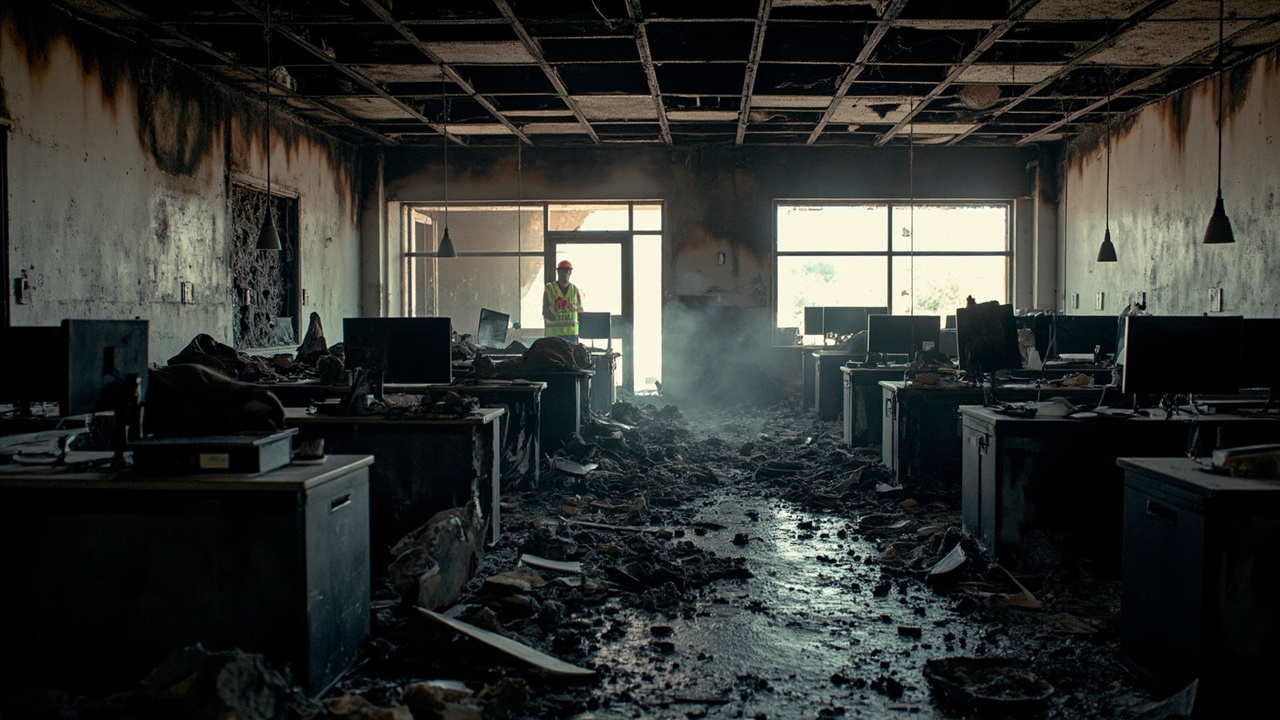
Indianapolis has a significant concentration of pre-1970 commercial buildings, particularly in the near eastside industrial corridor and the original wholesale district near South Meridian Street. These structures often contain materials no longer used in modern construction, including asbestos fireproofing, lead-based paint, and PCB-containing electrical equipment. When fire damages these buildings, commercial soot removal becomes a hazardous materials operation requiring EPA-certified abatement contractors and specific waste disposal protocols. The combination of older electrical systems and high heating loads during Indianapolis winters increases fire risk in these facilities. Many warehouse and manufacturing buildings also lack modern fire suppression systems or have outdated sprinkler coverage that fails to meet current NFPA 13 standards. This creates larger fire footprints and more extensive smoke migration when incidents occur.
Local Indianapolis fire marshals enforce the Indiana Fire Code, which incorporates specific amendments for commercial occupancies that differ from residential requirements. Commercial fire damage restoration must address these code provisions, including compartmentalization requirements, fire-rated assemblies, and emergency egress path protection. Apex Water Damage Restoration Indianapolis maintains relationships with Marion County building officials and understands the permit and inspection process for fire-damaged commercial properties. We know which restoration activities trigger plan review requirements and which can proceed under emergency permits. This local expertise prevents project delays and ensures your facility reopens without code violations or occupancy restrictions. Choosing a restoration provider unfamiliar with Indianapolis regulatory procedures can add weeks to your downtime and create compliance issues that affect your certificate of occupancy.