
Deciding Between an Interior French Drain and a Sump Pump for a Dry Basement
Water seeping into your Indianapolis basement creates a frustrating cycle of damage. You mop up the mess only to find it happening again after the next heavy rain. The root cause usually comes down to how groundwater moves through Central Indiana’s heavy clay soil and presses against your foundation walls. Two systems can stop this: interior French drains that channel water away before it enters and sump pumps that collect and eject water that has already entered. Both work but in different ways and for different situations. Who to Call for Emergency Water Damage Restoration in Carmel.
Choosing the right system depends on your specific basement conditions. A French drain works best when water consistently seeps through foundation walls. A sump pump excels when water pools in low spots or rises from beneath the floor. Many Indianapolis homes need both systems working together to handle the region’s unique soil and weather patterns. Complete Water Damage Repair for Historic Homes in Meridian-Kessler.
How an Interior French Drain Works
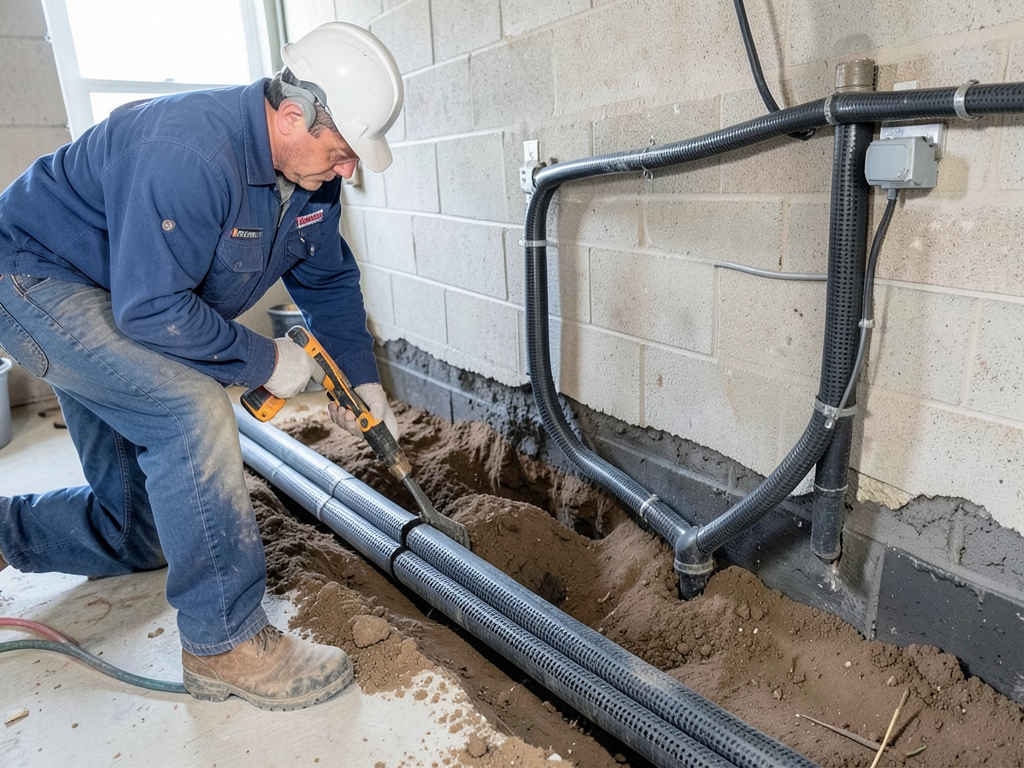
An interior French drain consists of a perforated pipe buried in a trench along the basement perimeter. The trench sits below the basement floor level and is filled with gravel to filter debris. Water entering the basement through walls or floor cracks flows into the trench and travels through the perforated pipe by gravity toward a collection point. Emergency Water Removal Services in Noblesville That Respond 24-7.
The system works passively without electricity. Water moves through the gravel bed into the pipe and exits through weep holes in the foundation or connects to a sump basin. The pipe typically runs along all exterior basement walls creating a continuous drainage path. When properly installed, water never accumulates on the basement floor because it enters the drain system first.
Installation requires cutting a channel around the basement perimeter, digging down to the footer, and laying perforated pipe in gravel. The floor is then patched over the trench creating a flush surface. This process takes several days and creates significant dust and debris during construction.
How a Sump Pump System Works
A sump pump system collects water that has already entered the basement or risen from beneath the floor. The system centers around a sump basin installed below the basement floor. Water flows into the basin through drains or natural seepage. When water reaches a certain level, a float switch activates the pump.
The pump uses an electric motor to eject water through a discharge pipe that exits the basement. The system requires electricity to operate and includes a check valve to prevent water from flowing back into the basin after pumping. Most systems include a battery backup to operate during power outages which commonly occur during heavy storms. Steps to Take After a Flood.
Installation involves digging a basin hole, installing the basin and pump, and running electrical wiring and discharge piping. The pump sits in the basin ready to activate when water levels rise. Regular testing ensures the float switch and motor function properly.
French Drain vs Sump Pump Comparison
| Feature | Interior French Drain | Sump Pump |
|---|---|---|
| Power Required | No | Yes |
| Initial Cost | Higher | Lower |
| Maintenance | Minimal | Regular testing needed |
| Life Expectancy | 20-30 years | 7-10 years |
| Best For | Wall seepage | Floor pooling |
Indianapolis Soil and Water Table Challenges
Central Indiana sits on Miami Silty Clay soil which holds water like a sponge. This clay expands when wet and creates hydrostatic pressure against foundation walls. Water cannot drain quickly through clay so it builds up around the foundation and seeks entry through any crack or joint.
The White River watershed affects water tables across Indianapolis. Areas near the river experience higher water tables especially during spring rains. Heavy spring precipitation combined with clay soil creates conditions where water pressure against foundations can crack walls and push water through floor cracks.. Read more about Why the Heavy Clay Soil in Fishers Causes Basement Walls to Seep and Crack.
Marion County building codes require proper drainage for all new construction. Indiana Residential Code Section 1805 mandates that foundation drainage systems prevent water accumulation that could damage structures. The code requires either exterior or interior drainage systems depending on site conditions.
When to Choose a French Drain
Choose a French drain when water consistently enters through basement walls. This happens when hydrostatic pressure forces water through mortar joints or when the water table sits high enough to create constant pressure. French drains work best in basements where water appears as dampness on walls rather than pooling on floors.
French drains excel in older Indianapolis homes built before modern waterproofing standards. Many homes in historic neighborhoods like Meridian-Kessler and Old Northside have porous foundations that allow gradual water entry. The continuous drainage path of a French drain handles this slow seepage effectively.. Read more about Understanding Why Your Standard Insurance Might Not Cover a Sump Pump Overflow in Greenwood.
Installation makes sense when you plan to finish your basement. The system prevents moisture damage to drywall, flooring, and stored items. French drains also reduce humidity levels which prevents mold growth and improves air quality.
When to Choose a Sump Pump
Select a sump pump when water pools in specific basement areas or when you notice water rising from floor cracks. Sump pumps handle situations where water enters from below through the floor slab or where grading issues direct surface water toward the foundation.
Sump pumps work well in newer homes with properly sealed foundations that occasionally experience flooding from heavy rains or plumbing failures. The system responds quickly to sudden water entry and can handle large volumes of water during storms.
Choose a sump pump if your basement has a low spot where water naturally collects. The pump can be placed directly in this area to remove water before it spreads across the floor. Battery backup systems provide protection during power outages when storms are most likely to cause flooding.
The Hybrid Approach for Indianapolis Homes
Many Indianapolis basements benefit from both systems working together. A French drain along the perimeter collects water entering through walls while a sump pump in the lowest corner handles water that makes it past the drain or rises from below.
The hybrid system provides redundant protection. If one system fails or becomes overwhelmed, the other continues working. This approach handles the full range of water entry scenarios common in Central Indiana from wall seepage to floor flooding.
Installation costs more initially but prevents expensive water damage repairs. The combined system handles everything from minor dampness to major flooding events that Indianapolis experiences during spring thunderstorms.
Maintenance Requirements for Each System
French drains require minimal maintenance once installed. The gravel bed and perforated pipe design prevents clogging from normal debris. However, roots from nearby trees can eventually grow into the system. Annual inspection ensures the drain remains clear and functional.
Sump pumps need regular testing to ensure proper operation. The float switch should activate the pump when water reaches the correct level. The check valve prevents backflow and should be inspected annually. Battery backups require battery replacement every 3-5 years.
Both systems benefit from keeping gutters clean and ensuring downspouts direct water away from the foundation. Proper grading around the home prevents surface water from overwhelming either drainage system.
Cost Factors for Indianapolis Installation
French drain installation costs vary based on basement size and existing conditions. A typical 1,000 square foot basement requires approximately 120 linear feet of trenching. Labor costs in Indianapolis average $45-65 per hour for skilled waterproofing crews. Material costs include perforated pipe, gravel, and waterproofing membrane.
Sump pump systems cost less initially but require ongoing maintenance and eventual replacement. A quality submersible pump with battery backup costs $600-1,200 installed. The basin, piping, and electrical work add $300-500 to the total.
DIY installation saves money but risks improper installation that can cause system failure. Professional installation includes proper grading, waterproofing connections, and code compliance that prevents future problems. Professional Sewage Cleanup and Sanitization Services in Greenwood.
Preventing Future Water Damage
Both systems prevent the costly damage that water causes to basements. Water destroys flooring, drywall, and personal belongings. It creates conditions for mold growth which affects air quality and health. Water also damages foundation walls over time leading to expensive structural repairs.
The cost of prevention typically runs 10-15% of potential water damage repair costs. A flooded basement can cost $5,000-15,000 to dry out and repair properly. Prevention systems pay for themselves by avoiding even one major flooding event.
Insurance may cover sudden water damage but often excludes groundwater entry or gradual seepage. Prevention systems provide protection that insurance does not cover.
Professional Installation Considerations
Professional waterproofing contractors understand local soil conditions and building codes. They know how to handle the clay soil challenges specific to Indianapolis and can recommend the right system for your home’s age and construction type.
Look for contractors with experience in your neighborhood. Homes in areas like Broad Ripple or Carmel may have different foundation types than those in downtown Indianapolis. Local experience ensures proper system design for your specific conditions.
Professional installation includes proper permits and inspections. This ensures your system meets Marion County building requirements and will function properly for years.
Making Your Final Decision
Evaluate your specific basement conditions before choosing a system. Look for signs of where water enters and how much accumulates. Consider your basement’s intended use and your budget for both installation and maintenance.
Consult with a professional waterproofing specialist who can assess your home’s unique conditions. They can recommend whether a French drain, sump pump, or hybrid system provides the best protection for your Indianapolis home.
Remember that proper installation matters more than the system type. Even the best system fails if not installed correctly for local soil and weather conditions.
Frequently Asked Questions
How long do French drains last in Indianapolis clay soil?
Properly installed French drains typically last 20-30 years in Central Indiana. The system’s longevity depends on correct installation depth, proper gravel bed design, and protection from tree root intrusion. Annual inspection helps identify potential issues before they cause system failure.
Do I need a battery backup for my sump pump?
Yes, battery backup provides critical protection during Indianapolis thunderstorms when power outages often occur. Storms that cause flooding are the same events likely to knock out electricity. A backup pump ensures continuous protection when you need it most.
Can I install these systems myself to save money?
DIY installation saves initial costs but risks improper installation that can cause system failure. Professional installation ensures proper grading, waterproofing connections, and code compliance. The cost difference often pays for itself by preventing expensive water damage repairs.
How much does French drain installation cost in Indianapolis?
French drain installation for a typical Indianapolis basement ranges from $5,000 to $12,000 depending on size and conditions. Factors affecting cost include basement perimeter length, existing floor conditions, and whether walls need waterproofing. Professional installation includes proper permits and inspections.
What maintenance do these systems require?
French drains need minimal maintenance beyond annual inspection for clogs or damage. Sump pumps require regular testing, annual cleaning, and battery replacement every 3-5 years. Both systems benefit from clean gutters and proper grading to prevent surface water overload.
Water damage creates expensive and stressful problems for Indianapolis homeowners. Whether you choose a French drain, sump pump, or hybrid system, the key is acting before the next heavy rain hits. Both systems prevent the mold, structural damage, and ruined belongings that water causes.
Professional assessment helps determine which system fits your specific basement conditions and budget. The right choice provides years of protection and peace of mind during Indiana’s wettest seasons.
Call (317) 703-7676 today to schedule your inspection and protect your home from water damage.
{
“@context”: “https://schema.org”,
“@type”: “BlogPosting”,
“headline”: “Deciding Between an Interior French Drain and a Sump Pump for a Dry Basement”,
“description”: “Compare interior French drains vs sump pumps for Indianapolis basements. Learn which system handles heavy clay soil and hydrostatic pressure best for your home.”,
“wordCount”: 1934,
“datePublished”: “2026-05-20T14:40:00.000Z”,
“dateModified”: “2026-05-20T14:40:00.000Z”,
“inLanguage”: “en-US”,
“mainEntityOfPage”: {
“@type”: “WebPage”,
“@id”: “https://apexwaterdamagerestorationindianapolis.com”
},
“publisher”: {
“@type”: “LocalBusiness”,
“name”: “Apex Water Damage Restoration Indianapolis”,
“url”: “https://apexwaterdamagerestorationindianapolis.com”
},
“author”: {
“@type”: “Organization”,
“name”: “Apex Water Damage Restoration Indianapolis”,
“url”: “https://apexwaterdamagerestorationindianapolis.com”
},
“image”: {
“@type”: “ImageObject”,
“url”: “https://apexwaterdamagerestorationindianapolis.com/wp-content/uploads/2026/03/deciding-between-an-interior-french-drain-and-a-su-1.png”
}
}
{
“@context”: “https://schema.org”,
“@type”: “LocalBusiness”,
“name”: “Apex Water Damage Restoration Indianapolis”,
“url”: “https://apexwaterdamagerestorationindianapolis.com”,
“address”: {
“@type”: “PostalAddress”,
“addressLocality”: “Indianapolis”
},
“areaServed”: {
“@type”: “City”,
“name”: “Indianapolis”
}
}
{
“@context”: “https://schema.org”,
“@type”: “FAQPage”,
“mainEntity”: [
{
“@type”: “Question”,
“name”: “How long do French drains last in Indianapolis clay soil?”,
“acceptedAnswer”: {
“@type”: “Answer”,
“text”: “Properly installed French drains typically last 20-30 years in Central Indiana. The system’s longevity depends on correct installation depth, proper gravel bed design, and protection from tree root intrusion. Annual inspection helps identify potential issues before they cause system failure.”
}
},
{
“@type”: “Question”,
“name”: “Do I need a battery backup for my sump pump?”,
“acceptedAnswer”: {
“@type”: “Answer”,
“text”: “Yes, battery backup provides critical protection during Indianapolis thunderstorms when power outages often occur. Storms that cause flooding are the same events likely to knock out electricity. A backup pump ensures continuous protection when you need it most.”
}
},
{
“@type”: “Question”,
“name”: “Can I install these systems myself to save money?”,
“acceptedAnswer”: {
“@type”: “Answer”,
“text”: “DIY installation saves initial costs but risks improper installation that can cause system failure. Professional installation ensures proper grading, waterproofing connections, and code compliance. The cost difference often pays for itself by preventing expensive water damage repairs.”
}
},
{
“@type”: “Question”,
“name”: “How much does French drain installation cost in Indianapolis?”,
“acceptedAnswer”: {
“@type”: “Answer”,
“text”: “French drain installation for a typical Indianapolis basement ranges from $5,000 to $12,000 depending on size and conditions. Factors affecting cost include basement perimeter length, existing floor conditions, and whether walls need waterproofing. Professional installation includes proper permits and inspections.”
}
},
{
“@type”: “Question”,
“name”: “What maintenance do these systems require?”,
“acceptedAnswer”: {
“@type”: “Answer”,
“text”: “French drains need minimal maintenance beyond annual inspection for clogs or damage. Sump pumps require regular testing, annual cleaning, and battery replacement every 3-5 years. Both systems benefit from clean gutters and proper grading to prevent surface water overload.”
}
}
]
}
{
“@context”: “https://schema.org”,
“@type”: “BreadcrumbList”,
“itemListElement”: [
{
“@type”: “ListItem”,
“position”: 1,
“name”: “Home”,
“item”: “https://apexwaterdamagerestorationindianapolis.com”
},
{
“@type”: “ListItem”,
“position”: 2,
“name”: “Blog”,
“item”: “https://apexwaterdamagerestorationindianapolis.com/blog”
},
{
“@type”: “ListItem”,
“position”: 3,
“name”: “Deciding Between an Interior French Drain and a Sump Pump for a Dry Basement”
}
]
}
{
“@context”: “https://schema.org”,
“@type”: “Service”,
“serviceType”: “Water Damage Restoration”,
“provider”: {
“@type”: “LocalBusiness”,
“name”: “Apex Water Damage Restoration Indianapolis”,
“url”: “https://apexwaterdamagerestorationindianapolis.com”
},
“areaServed”: {
“@type”: “City”,
“name”: “Indianapolis”
},
“description”: “Compare interior French drains vs sump pumps for Indianapolis basements. Learn which system handles heavy clay soil and hydrostatic pressure best for your home.”
}