
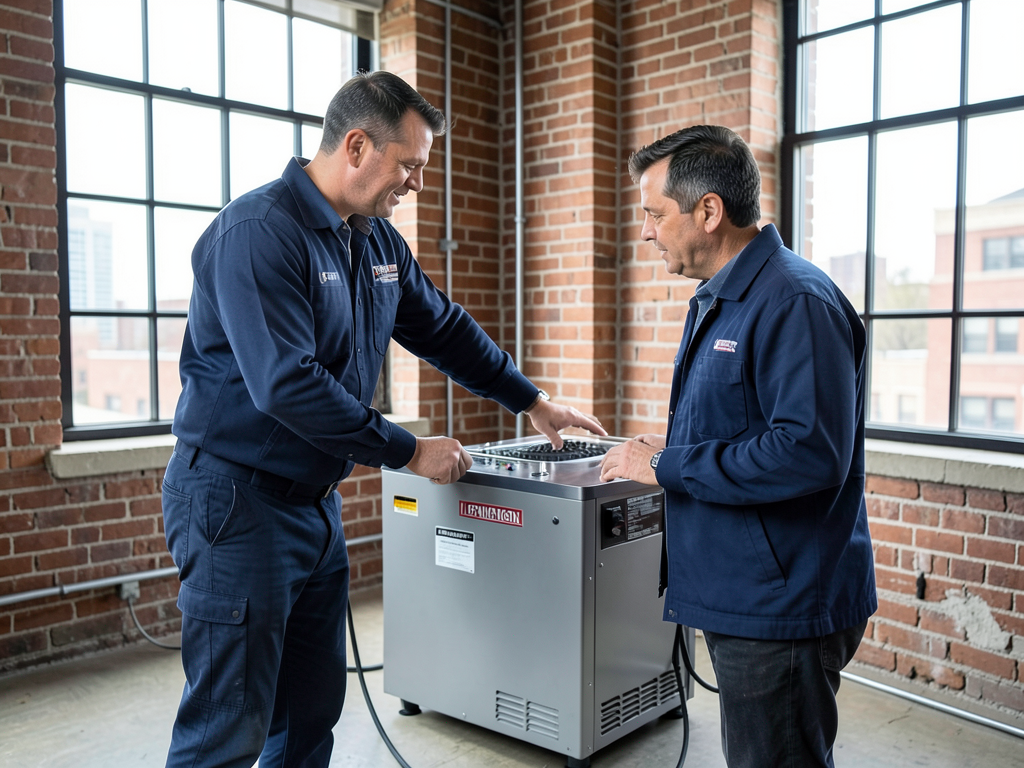
How Industrial Dehumidifiers Speed Up Recovery in Downtown Indy Lofts
When water floods a Downtown Indianapolis loft, every hour counts. The humid Indiana summers and aging infrastructure in the Wholesale District can turn a small leak into a major structural problem within 48 hours. Industrial dehumidifiers paired with high-velocity air movers create the drying conditions that stop mold growth and protect your investment. This is not a DIY fix—it requires professional-grade equipment operating under IICRC S500 standards to restore your space safely and quickly. IICRC S500 Standards.
Why Downtown Indy Lofts Need Specialized Drying Equipment
Downtown Indianapolis lofts often feature open floor plans, exposed brick, and large windows that create unique drying challenges. The combination of high ceilings and concrete subfloors means moisture can hide in places a household fan cannot reach. Industrial dehumidifiers remove gallons of water from the air each day, while axial air movers push dry air into wall cavities and under flooring. Without this equipment, trapped moisture leads to warped wood floors, crumbling plaster, and the musty odors that signal mold growth. Who to Call for Emergency Water Damage Restoration in Carmel.
The Wholesale District’s older buildings face additional risks from combined sewer systems that back up during heavy rains. When sewage mixes with clean water damage, the contamination level rises to Category 3, requiring not just drying but complete sanitization. Industrial-grade LGR (Low Grain Refrigerant) dehumidifiers can pull moisture from materials even when humidity levels are already low, something standard rental units cannot accomplish. Professional Sewage Cleanup and Sanitization Services in Greenwood.
Professional-Grade Equipment That Makes the Difference
Industrial Air Movers and High-Velocity Fans
Industrial air movers deliver 3,000+ CFM (cubic feet per minute) of airflow, compared to 200-400 CFM from household fans. Axial models move large volumes of air across open spaces, perfect for Downtown loft living rooms with 12-foot ceilings. Centrifugal units create focused pressure to drive air under cabinets and into wall cavities where moisture hides. The key is strategic placement—air movers work in a vortex pattern, ensuring every square foot receives consistent airflow.. Read more about Dealing with Ceiling Leaks from Upstairs Neighbors in Mass Ave Condos.
Professional technicians calculate the exact number of air movers needed based on the cubic footage and material types affected. Too few units leave wet spots; too many waste energy and create noise that disrupts the neighborhood. The equipment runs 24/7 during the drying process, with daily moisture readings confirming progress.
Low Grain Refrigerant (LGR) Dehumidifiers
LGR dehumidifiers represent the gold standard for structural drying in Indianapolis. These units remove 20-30 gallons of water per day at AHAM (Association of Home Appliance Manufacturers) conditions, operating efficiently even when relative humidity drops below 40%. Unlike standard refrigerant dehumidifiers, LGRs use a double-cooling system that pre-cools incoming air, allowing them to extract moisture from materials that feel dry to the touch but still contain 15-20% moisture content. Complete Water Damage Repair for Historic Homes in Meridian-Kessler.
In Downtown lofts, LGRs prevent the secondary damage that occurs when warm, moist air meets cool concrete or glass. The equipment maintains specific humidity levels that accelerate evaporation without causing condensation on windows or exposed ductwork. Professional-grade units include built-in pumps for continuous drainage, eliminating the need to empty buckets every few hours.
HEPA Air Scrubbers and Odor Control
Water damage often brings airborne contaminants, especially in older buildings where lead paint or asbestos may be present. HEPA air scrubbers filter particles down to 0.3 microns, removing mold spores, dust, and other allergens from the drying environment. These units move 500-2,000 CFM while maintaining negative air pressure that prevents contaminants from spreading to unaffected areas. EPA Mold Guidelines.
Odor control becomes critical in multi-unit buildings where neighbors share ventilation systems. Industrial hydroxyl generators and ozone machines neutralize the musty smells that develop within 24-48 hours of water exposure. The equipment operates safely in occupied spaces, unlike older ozone treatments that required evacuation. Emergency Water Removal Services in Noblesville That Respond 24-7.
Detection Tools: Why We Don’t Just Dry What We See
Professional water damage restoration starts with detection, not equipment setup. Thermal imaging cameras reveal temperature differences that indicate moisture behind walls, while penetrating moisture meters measure water content in wood and drywall at specific depths. Non-penetrating meters use electromagnetic signals to scan large areas quickly without damaging surfaces.. Read more about How Long You Really Have Before Mold Starts Growing in Your Humid Indy Basement.
In Downtown Indy lofts, these tools prove essential because water travels along the path of least resistance. A leak from the unit above might travel through ceiling joists and appear as a wet spot 15 feet away. Without proper detection, technicians might miss 30-40% of the affected area, leading to recurring problems and insurance claim denials.
Moisture mapping creates a documented drying plan that insurance adjusters recognize. The process involves taking baseline readings in unaffected areas, then comparing daily measurements to confirm materials return to pre-loss conditions. This documentation also proves the property meets the IICRC S500 standard for dry, which requires wood materials to reach 12% moisture content or less.
The Science of Psychrometry: How Our Equipment Saves Your Property
Psychrometry is the study of air and moisture interactions, and it drives every decision in professional drying. The basic principle: warm air holds more moisture than cold air. By heating the affected space while removing humidity, we create conditions where water moves from wet materials into the air, then into the dehumidifier.
The process follows specific calculations. A 1,000-square-foot loft with 10-foot ceilings contains 10,000 cubic feet of air. To dry wet carpet and padding, we need to move that entire air volume 4-6 times per hour. This requires multiple air movers positioned to create a vortex effect, with dehumidifiers placed to capture the moisture-laden air.
Temperature control proves critical in Indianapolis’s climate. Summer humidity can exceed 85%, making it impossible for standard equipment to achieve proper drying conditions. Professional-grade dehumidifiers include reheat coils that warm the dry air before sending it back into the space, maintaining the temperature differential needed for rapid evaporation.
Serving Central Indiana: Rapid Deployment to Marion and Surrounding Counties
Apex Water Damage Restoration maintains a fleet of fully stocked emergency vehicles positioned throughout Marion County for 30-minute response times to Downtown Indianapolis. Our equipment inventory includes over 50 industrial dehumidifiers and 100+ air movers, ensuring we can handle multiple simultaneous losses in the Wholesale District, Mass Ave, and surrounding neighborhoods.
The Indianapolis market presents unique challenges. Our clay-heavy soil causes foundation settling that creates stress cracks in brick and mortar, providing entry points for water during heavy rains. The freeze-thaw cycles common in Central Indiana can cause pipes to burst when temperatures fluctuate rapidly, as often happens in late winter.
We coordinate directly with property managers of Downtown high-rises, providing after-hours access and elevator reservations to minimize disruption. Our technicians hold IICRC certifications in Water Damage Restoration and Applied Structural Drying, ensuring compliance with all local building codes and insurance requirements.
Equipment vs. DIY: Why Professional Intervention Matters
Consumer-grade equipment cannot match industrial performance. A typical rental dehumidifier removes 30-50 pints per day, while our LGR units extract 70-100+ pints in the same conditions. More importantly, professional equipment maintains specific humidity and temperature ranges that accelerate drying without causing secondary damage.
The cost difference becomes clear when examining long-term outcomes. DIY attempts often leave 15-20% of moisture behind, leading to mold growth that requires remediation costing $3,000-$10,000. Professional drying, while initially more expensive, prevents these secondary issues and typically results in lower insurance claims. Safe and Permanent Mold Remediation for Homes in Broad Ripple.
Time factors heavily into the equation. Professional teams can set up complete drying systems within 2-3 hours of arrival, while DIY efforts might take days to achieve similar coverage. In Indianapolis’s humid climate, those extra hours allow mold spores to establish colonies that become much harder to eliminate.
Commercial Applications: Protecting Downtown Businesses
Commercial properties in the Wholesale District face additional pressures. Business interruption costs $500-$2,000 per hour for many Downtown establishments, making rapid response essential. Our commercial drying teams work during off-hours and coordinate with facility managers to maintain critical operations while addressing water damage.
Office buildings require special consideration for their complex HVAC systems. Water in ceiling plenums can spread throughout the building via air handling units. We use HEPA filtration and containment barriers to prevent cross-contamination while maintaining ventilation in occupied areas.
Industrial equipment also handles the larger square footage typical of commercial spaces. A 10,000-square-foot office might require 20+ air movers and 6-8 dehumidifiers operating simultaneously, a scale impossible with consumer equipment.
Emergency Response: What to Expect When Disaster Strikes
When you call (317) 703-7676 for emergency water damage in Downtown Indianapolis, our dispatcher immediately mobilizes the nearest crew. The team arrives within 30-45 minutes with a complete drying trailer containing all necessary equipment. Initial assessment takes 15-20 minutes, followed by setup that typically requires 2-3 hours for a standard loft.
During the drying process, technicians monitor conditions every 4-6 hours, adjusting equipment placement based on moisture readings. Most residential loft projects complete in 3-5 days, while commercial spaces might require 5-7 days depending on the extent of damage and building materials involved.
We provide daily progress reports to property owners and insurance adjusters, including thermal imaging photos that show drying progress. This documentation proves invaluable for insurance claims and ensures all affected materials reach proper moisture content before equipment removal.
Prevention: Protecting Your Investment Year-Round
Prevention starts with understanding Indianapolis’s specific risks. The city’s combined sewer system overflows during heavy rains, backing up into basements and lower-level units. Installing backwater valves and maintaining proper grading around foundations prevents many common water damage scenarios.
Regular HVAC maintenance prevents condensation issues that damage walls and ceilings. Annual inspections of roof membranes, window seals, and plumbing connections catch potential problems before they cause major damage. For Downtown lofts, this includes checking the building’s main water shutoff valve and knowing how to operate it quickly.
Consider installing water sensors near water heaters, washing machines, and under sinks. These devices detect leaks within minutes and can automatically shut off water supply, preventing the extensive damage that occurs when leaks go unnoticed for hours or days.
Why Choose Professional Restoration for Your Downtown Loft
Professional water damage restoration is not just about drying—it’s about protecting your property’s value and your family’s health. The equipment we use operates under strict standards that ensure complete moisture removal, preventing the mold growth and structural damage that plague DIY attempts.
Our technicians understand the unique construction methods used in Downtown Indianapolis lofts, from the load-bearing brick walls to the post-and-beam construction common in converted warehouses. This knowledge guides equipment placement and ensures we address all affected areas, not just the visible damage.
Insurance companies prefer working with certified professionals because our documentation meets their requirements for claim approval. We provide detailed scope-of-work documents, daily progress reports, and final clearance testing that satisfy even the most stringent adjusters.
Frequently Asked Questions
How long does professional drying take for a Downtown loft?
Most residential loft projects require 3-5 days of equipment operation. The exact timeline depends on the extent of damage, building materials, and current weather conditions. Professional monitoring ensures we complete the job only when all materials reach proper moisture content.
Will my insurance cover professional drying equipment?
Most homeowner’s policies cover water damage restoration, including professional drying equipment, when the damage results from a sudden, accidental event like a burst pipe. Gradual damage from maintenance issues or flooding typically requires separate coverage. We work directly with insurance adjusters to ensure proper documentation.
Can I stay in my loft during the drying process?
Yes, the equipment we use is safe for occupied spaces. The noise level is similar to a window air conditioner, and we position equipment to minimize disruption. However, we recommend temporary relocation if sewage contamination is involved or if you have respiratory sensitivities.
What makes LGR dehumidifiers better than standard units?
LGR (Low Grain Refrigerant) dehumidifiers use a double-cooling system that allows them to extract moisture even when humidity levels are already low. This means they can continue removing water from materials that feel dry to the touch but still contain damaging moisture. Standard units become inefficient below 60% relative humidity.
How do you prevent mold growth during the drying process?
We maintain specific humidity levels below 40% and temperatures between 70-90 degrees Fahrenheit, conditions that prevent mold spore activation. The rapid drying process minimizes the time available for mold establishment. We also use HEPA air scrubbers to remove airborne spores during the drying process.
Do you work with historic Downtown buildings?
Yes, we have extensive experience with historic preservation requirements in the Wholesale District and surrounding areas. Our methods comply with local historic commission guidelines, and we use equipment that won’t damage original materials like hardwood floors or plaster walls.
What areas do you serve besides Downtown Indianapolis?
We serve all of Marion County and surrounding areas including Carmel, Fishers, Greenwood, and Zionsville. Our emergency response covers a 30-mile radius from Downtown, with specialized teams for commercial and residential properties.
Take Action Before Minor Water Damage Becomes a Major Problem
Water damage in Downtown Indianapolis lofts requires immediate professional attention. The humid climate and aging infrastructure create perfect conditions for rapid mold growth and structural damage. Don’t risk your property’s value or your family’s health with DIY attempts that leave moisture behind.
Our industrial-grade equipment, certified technicians, and rapid response times ensure your loft returns to pre-loss condition quickly and safely. We handle everything from initial water extraction to final moisture testing, working directly with your insurance company to streamline the claims process.
Pick up the phone and call (317) 703-7676 today. Our emergency response team is ready 24/7 to protect your Downtown Indianapolis loft from water damage. Every hour counts when water threatens your property—don’t wait until it’s too late.