
How to Identify Mold After a Small Window Leak in Your Brownsburg Bedroom
A small window leak in your Brownsburg bedroom might seem harmless at first, but within 24 to 48 hours that moisture can trigger mold growth behind your drywall. In Central Indiana’s humid summers and freezing winters, even a tiny gap in caulking or flashing can let water seep into wall cavities where it stays trapped. This guide shows you how to spot the warning signs early, understand the health risks, and know when it is time to call a professional mold remediation team. Water Damage Restoration Plainfield.
Why Windows Leak in Central Indiana Homes
Indianapolis-area homes face unique challenges from seasonal temperature swings. When warm moist air meets a cold window frame in winter, condensation forms. Over time, old caulk or cracked glazing allows that moisture to penetrate deeper. In Brownsburg’s older neighborhoods like Brownsburg Meadows or near the White Lick Creek, many homes built in the 1970s and 1980s have original single-pane or poorly sealed double-pane windows. These windows often fail where the frame meets the sill, letting water drip into the wall cavity unnoticed.. Read more about What Is Secondary Water Damage (And Why It Costs So Much to Fix).
Common failure points include:
- Deteriorated exterior caulk that shrinks and cracks
- Failed window glazing compound on older wood windows
- Improper or missing flashing above the window header
- Settling foundation causing the window frame to pull away from the wall
Once water enters, it wicks into porous materials like drywall paper and wood studs. In Central Indiana’s average summer humidity of 70% or higher, mold spores can germinate within a day or two.
Signs of Hidden Mold Behind Your Bedroom Wall
Because the leak source is often out of sight, mold growth can go undetected until it becomes a larger problem. Here are the physical signs you might notice:
- Musty odor: A damp, earthy smell that lingers even after airing out the room
- Discoloration: Yellow, brown, or black spots on the wall near the window
- Peeling paint or bubbling wallpaper: Moisture breaks the bond between wall covering and surface
- Soft or spongy drywall: Press gently; if it feels weak, water has degraded it
- Allergic reactions: Increased sneezing, coughing, or itchy eyes when in the room
If you see any of these, avoid disturbing the area. Mold spores can become airborne and spread to other parts of your home.
Common Mold Types Found in Indianapolis Bedrooms
Not all mold is the same. In Brownsburg bedrooms with window leaks, you are most likely to encounter:
- Cladosporium: Olive-green to brown, often on damp window sills or walls
- Aspergillus: Powdery, can be yellow, green, or black; common in humid indoor areas
- Stachybotrys chartarum (black mold): Dark green to black, slimy when wet, thrives on cellulose materials like drywall
Black mold is often sensationalized, but any mold growth in your living space can cause respiratory issues, especially for children, the elderly, or those with asthma. The CDC states that exposure to damp and moldy environments may lead to nasal stuffiness, throat irritation, coughing, or skin irritation. CDC Mold Information.
When to Call a Professional Mold Remediation Team
Small surface mold on a window sill can sometimes be cleaned with detergent and water, but a leak inside the wall cavity requires professional containment. The IICRC S520 Standard for Professional Mold Remediation sets clear guidelines: if the affected area is larger than 10 square feet or the water source is unknown, a certified technician should handle it.. Read more about Why You Should Not Ignore That Musty Smell in Your Lawrence Crawl Space.
Call (317) 703-7676 today if you notice:
- Visible mold covering more than a 10-square-foot area
- A persistent leak that you cannot locate
- Musty odors with no visible source
- Health symptoms that improve when you leave the room
Professionals use moisture meters to detect hidden dampness, infrared cameras to find temperature differences behind walls, and HEPA air scrubbers to capture airborne spores during removal. EPA Mold Resources.
Our Brownsburg Mold Remediation Process
When you call Apex Water Damage Restoration Indianapolis, we follow a proven process to eliminate mold and prevent recurrence:
- Inspection and Assessment
We use moisture meters and thermal imaging to locate the full extent of water damage and mold growth.
- Containment
Physical barriers and negative air pressure keep spores from spreading to other rooms.
- Air Filtration
Industrial-grade HEPA air scrubbers capture microscopic mold spores.
- Removal and Cleaning
Infected drywall, insulation, and other porous materials are safely removed. Non-porous surfaces are cleaned with antimicrobial agents.
- Drying and Restoration
We dry the cavity with commercial dehumidifiers, then repair or replace damaged materials. We also inspect and repair the window leak source.. Read more about Why Your Whole House Humidifier Might Be Causing Hidden Wall Leaks in Decatur Township.
Preventing Future Window Leaks and Mold Growth
After remediation, take these steps to protect your Brownsburg bedroom: Steps to Take After a Flood.
- Inspect caulk annually: Replace cracked or shrinking exterior caulk before winter
- Check flashing: Ensure roof-to-wall flashing directs water away from the window
- Improve drainage: Keep gutters clean and extend downspouts at least 6 feet from the foundation
- Control indoor humidity: Use a dehumidifier to keep bedroom humidity between 30-50%
- Monitor after storms: Check window sills and surrounding walls for signs of water intrusion
Local building codes in Marion County require proper flashing and weatherproofing for window installations. If your home is in a historic Brownsburg district, consult a contractor familiar with preserving original materials while meeting modern moisture barriers. Office Building Water Restoration.
Cost Factors for Mold Remediation in Central Indiana
Professional mold remediation costs vary based on the size of the affected area, the materials involved, and the need for structural repairs. A small contained area might cost between $500 and $1,500, while a larger job involving wall demolition and window repair could range from $2,000 to $6,000.
Insurance coverage depends on the cause of the leak. If the window was damaged by a covered peril like a windstorm, your homeowner’s policy may pay for both the mold removal and the window repair. However, long-term neglect or maintenance issues are typically not covered.
Call (317) 703-7676 for a free inspection and estimate. We work directly with your insurance adjuster to streamline the claims process.
Frequently Asked Questions
Can I just bleach the mold and be done?
Bleach can discolor mold on non-porous surfaces but does not kill mold roots in porous materials like drywall. It also adds moisture, which can worsen the problem. Professional remediation removes the source and treats the area to prevent regrowth.
How fast does mold grow after a leak?
Under ideal conditions, mold can begin to grow within 24 to 48 hours. In Central Indiana’s humid climate, growth can be even faster if the area stays warm and damp.
Is all black mold toxic?
Not all black-colored mold is Stachybotrys chartarum. Many common molds appear black. The health risk depends on the species, the amount of exposure, and the individual’s sensitivity. Professional testing can identify the type.
Will my insurance cover mold from a window leak?
Coverage depends on the cause. If the leak resulted from a sudden, accidental event covered by your policy, remediation may be included. Maintenance-related or long-term leaks are usually excluded. Check your policy or call your agent for details.
How can I tell if mold is behind my wall?
Look for signs like musty odors, unexplained stains, peeling paint, or soft drywall near the window. A moisture meter can confirm dampness, but only a professional inspection can determine if mold is present inside the wall cavity. Peeling Paint & Wallpaper.
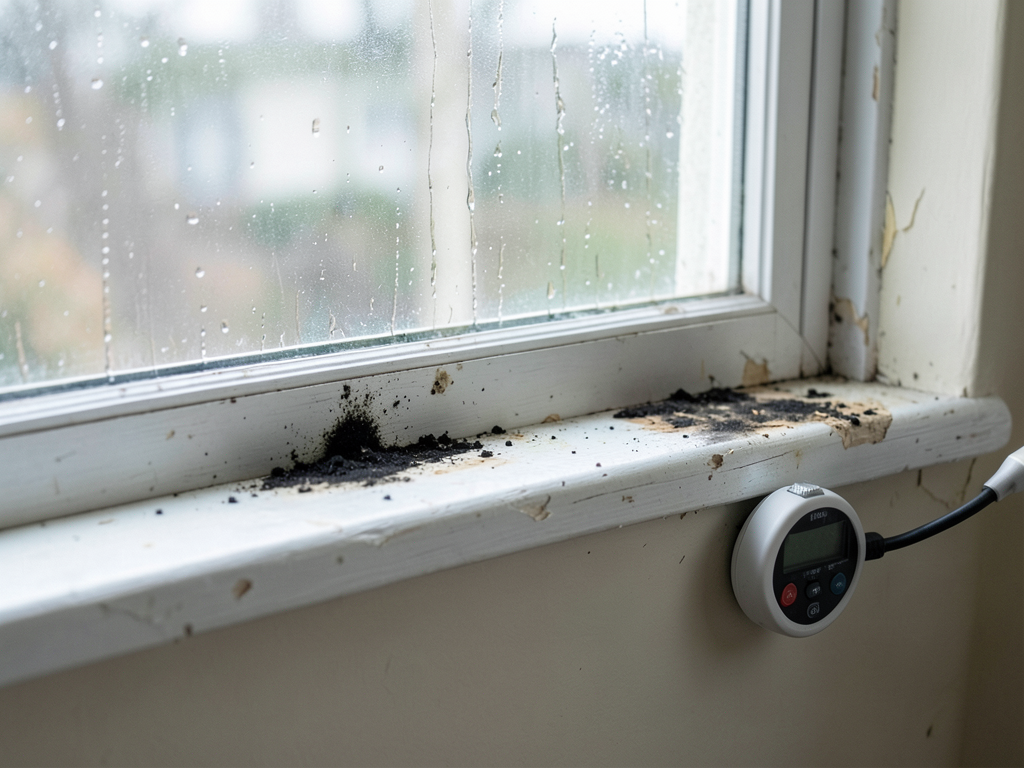
Featured Image: Close-up of a bedroom window with visible water stains, peeling paint, and a small patch of black mold on the sill. A moisture meter is shown in use on the wall below the window.
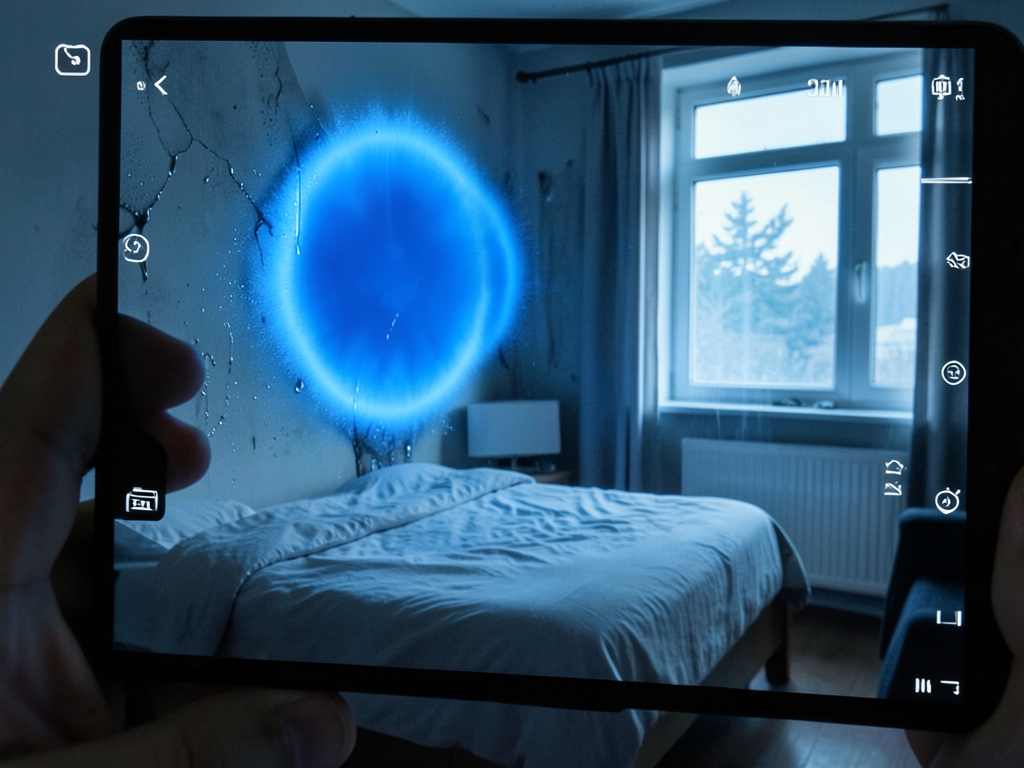
Image 2: Infrared thermal imaging camera display showing a cold blue spot behind a bedroom wall, indicating moisture intrusion from a window leak.
Image 3: Professional mold remediation technician in full PPE installing containment sheeting around a bedroom window area during mold removal.
If you suspect mold from a window leak in your Brownsburg bedroom, do not wait. Moisture spreads quickly, and mold can affect your health and your home’s structure. Call (317) 703-7676 today to schedule a professional inspection. We serve Brownsburg and all of Central Indiana with 24/7 emergency response and certified mold remediation services. Rapid Response Flood Extraction.
Protect your home and your family. Pick up the phone and call (317) 703-7676 before the next storm hits.
You may also find this helpful. Your Rights as a Renter When Your Downtown Indy Apartment Suffers Water Damage.
{
“@context”: “https://schema.org”,
“@type”: “BlogPosting”,
“headline”: “How to Identify Mold After a Small Window Leak in Your Brownsburg Bedroom”,
“description”: “Learn how to spot mold from a window leak in your Brownsburg bedroom. Discover hidden signs, health risks, and when to call a professional mold remediation expert.”,
“wordCount”: 1384,
“datePublished”: “2026-04-11T07:14:00.000Z”,
“dateModified”: “2026-04-11T07:14:00.000Z”,
“inLanguage”: “en-US”,
“mainEntityOfPage”: {
“@type”: “WebPage”,
“@id”: “https://apexwaterdamagerestorationindianapolis.com”
},
“publisher”: {
“@type”: “LocalBusiness”,
“name”: “Apex Water Damage Restoration Indianapolis”,
“url”: “https://apexwaterdamagerestorationindianapolis.com”
},
“author”: {
“@type”: “Organization”,
“name”: “Apex Water Damage Restoration Indianapolis”,
“url”: “https://apexwaterdamagerestorationindianapolis.com”
},
“image”: {
“@type”: “ImageObject”,
“url”: “https://apexwaterdamagerestorationindianapolis.com/wp-content/uploads/2026/03/how-to-identify-mold-after-a-small-window-leak-in-1.png”
}
}
{
“@context”: “https://schema.org”,
“@type”: “LocalBusiness”,
“name”: “Apex Water Damage Restoration Indianapolis”,
“url”: “https://apexwaterdamagerestorationindianapolis.com”,
“address”: {
“@type”: “PostalAddress”,
“addressLocality”: “Indianapolis”
},
“areaServed”: {
“@type”: “City”,
“name”: “Indianapolis”
}
}
{
“@context”: “https://schema.org”,
“@type”: “FAQPage”,
“mainEntity”: [
{
“@type”: “Question”,
“name”: “Can I just bleach the mold and be done?”,
“acceptedAnswer”: {
“@type”: “Answer”,
“text”: “Bleach can discolor mold on non-porous surfaces but does not kill mold roots in porous materials like drywall. It also adds moisture, which can worsen the problem. Professional remediation removes the source and treats the area to prevent regrowth.”
}
},
{
“@type”: “Question”,
“name”: “How fast does mold grow after a leak?”,
“acceptedAnswer”: {
“@type”: “Answer”,
“text”: “Under ideal conditions, mold can begin to grow within 24 to 48 hours. In Central Indiana’s humid climate, growth can be even faster if the area stays warm and damp.”
}
},
{
“@type”: “Question”,
“name”: “Is all black mold toxic?”,
“acceptedAnswer”: {
“@type”: “Answer”,
“text”: “Not all black-colored mold is Stachybotrys chartarum. Many common molds appear black. The health risk depends on the species, the amount of exposure, and the individual’s sensitivity. Professional testing can identify the type.”
}
},
{
“@type”: “Question”,
“name”: “Will my insurance cover mold from a window leak?”,
“acceptedAnswer”: {
“@type”: “Answer”,
“text”: “Coverage depends on the cause. If the leak resulted from a sudden, accidental event covered by your policy, remediation may be included. Maintenance-related or long-term leaks are usually excluded. Check your policy or call your agent for details.”
}
},
{
“@type”: “Question”,
“name”: “How can I tell if mold is behind my wall?”,
“acceptedAnswer”: {
“@type”: “Answer”,
“text”: “Look for signs like musty odors, unexplained stains, peeling paint, or soft drywall near the window. A moisture meter can confirm dampness, but only a professional inspection can determine if mold is present inside the wall cavity. Peeling Paint & Wallpaper.”
}
}
]
}
{
“@context”: “https://schema.org”,
“@type”: “HowTo”,
“name”: “Mold Remediation Process”,
“step”: [
{
“@type”: “HowToStep”,
“position”: 1,
“name”: “Inspection and Assessment”,
“text”: “We use moisture meters and thermal imaging to locate the full extent of water damage and mold growth.”
},
{
“@type”: “HowToStep”,
“position”: 2,
“name”: “Containment”,
“text”: “Physical barriers and negative air pressure keep spores from spreading to other rooms.”
},
{
“@type”: “HowToStep”,
“position”: 3,
“name”: “Air Filtration”,
“text”: “Industrial-grade HEPA air scrubbers capture microscopic mold spores.”
},
{
“@type”: “HowToStep”,
“position”: 4,
“name”: “Removal and Cleaning”,
“text”: “Infected drywall, insulation, and other porous materials are safely removed. Non-porous surfaces are cleaned with antimicrobial agents.”
},
{
“@type”: “HowToStep”,
“position”: 5,
“name”: “Drying and Restoration”,
“text”: “We dry the cavity with commercial dehumidifiers, then repair or replace damaged materials. We also inspect and repair the window leak source.”
}
],
“image”: “https://apexwaterdamagerestorationindianapolis.com/wp-content/uploads/2026/03/how-to-identify-mold-after-a-small-window-leak-in-1.png”
}
{
“@context”: “https://schema.org”,
“@type”: “BreadcrumbList”,
“itemListElement”: [
{
“@type”: “ListItem”,
“position”: 1,
“name”: “Home”,
“item”: “https://apexwaterdamagerestorationindianapolis.com”
},
{
“@type”: “ListItem”,
“position”: 2,
“name”: “Blog”,
“item”: “https://apexwaterdamagerestorationindianapolis.com/blog”
},
{
“@type”: “ListItem”,
“position”: 3,
“name”: “How to Identify Mold After a Small Window Leak in Your Brownsburg Bedroom”
}
]
}
{
“@context”: “https://schema.org”,
“@type”: “Service”,
“serviceType”: “Water Damage Restoration”,
“provider”: {
“@type”: “LocalBusiness”,
“name”: “Apex Water Damage Restoration Indianapolis”,
“url”: “https://apexwaterdamagerestorationindianapolis.com”
},
“areaServed”: {
“@type”: “City”,
“name”: “Indianapolis”
},
“description”: “Learn how to spot mold from a window leak in your Brownsburg bedroom. Discover hidden signs, health risks, and when to call a professional mold remediation expert.”
}